For many reading, I have been where you are now. I am no academic; I lack any formal background in Art, nor am I educated in its history and theories. It would be easy to dismiss me as hostile, elitist, or perhaps distracted by grief for my own failed photographic ambitions. I am aware of the ugly truth of my skill level - the flaws I see but never find time to address. I often gaze in uncomfortable awe at photographs that surpass every skill I have in a medium I care for so deeply.
Like many of my era, I joined the excited mass of cheap DSLRs and the rise of Flickr. Late nights awake following people, finding their followers and the groups they posted images into; it was a time of potent inspiration and imagination. A never-ending summer of creativity, a medium unlikely ever to be conquered, its depth of directions unimaginable. As long as the will to create was there, a mind primed for Art, nothing would fluctuate its orbit.
There have been many occasions when creativity is blocked, when ideas and inspiration fail to materialise. It never mattered; the fire of photography was a fundamental law, as reliable as the tide. Today, something is off - something difficult to quantify, a static in an otherwise functioning line. The landscape is the same, the gear is better, but the Aura is missing. The symptom is hard to diagnose. As many of us are now at an age where we naturally lose some spark, we blame ourselves - except we know we haven’t lost anything. The harder we look, the less obvious the problem becomes. It is such a weak signal that we assume it is our weakening vitality, except we know it isn’t, and it’s getting worse.
What I want to tell you is not some abstract concept that materialised whilst our heads were turned. I have no simplistic argument about the rise of AI replacing photography and removing any enjoyment that could result from its pursuit. All I want to do is simply show you what you have already witnessed, point out when the static in the line occurs, and most importantly: name it. Label it so you can draw it out of the fog into the open where its form becomes obvious.
This sense of undefinable malaise is not a phantom flicker of despair. It is a quantifiable state - a consequence of our position within the system we currently occupy. To address it, we must map the stages of our development. By establishing a clear Taxonomy, the invisible walls of this creative progression become visible. We can finally identify not only where we are, but where these walls have locked us into a predictable trap.
We have not failed as photographers, nor have we reached the finality of the medium's potential. Rather, the Taxonomy reveals an inevitable plateau. This is a cage of our own making, built on the twin desires for technical and artistic mastery. It is upon reaching this ceiling that the Aura slips away and the Static appears. To move forward, we must first define the stages that led us here.
Stage Negative should not exist. On first detection, it appears as an anomaly, yet when viewed in relation to the system from which it was cultured, its development becomes cold and logical. It is the triumph of efficiency over the discomfort of exploration. Because the contemporary system is sustained predominantly by social receipts, the photographer becomes trapped in a feedback loop of mechanical operation. They are no longer seeking an encounter; they are documenting their own presence over the vision before them, obscuring the moment of actual truth. The image serves merely as proof of participation - a voucher to be traded for social currency. It is the act of keeping busy with photography rather than being a participant. In Stage Negative, the camera is not a tool for vision, but an apparatus for the production of data to satisfy the need to signal that the event occurred.
The scope of Stage Negative encompasses the most skilled and highly regarded photographers within online platforms. It is here that comfort in ability turns to decay. When the competent practitioner loses the "Innocent Eye," they substitute it for a tried and tested, productionised formula. To others within the system, this appears as a consistency of technical and artful mastery. In reality, Stage Negative is the substitution of intent - the sacrifice of the "Flame" for the Social Ritual.
Stage One is the "Innocent Eye"; it is the eternal summer of creativity. It is defined by late nights spent in awe at the masterful work of others. Stage One is the foundational level of the Taxonomy because it possesses a rare and vital Intent: the pure drive to create the best image possible with the skillset and knowledge attained thus far. It is the graduation from this state—the loss of the "Beginner's Mind" - that all subsequent stages of progression mourn.
The unspoken Malaise has no oxygen to exist here; the photographer is overwhelmed by possibility. At this stage, the practitioner does not look at the work of others to exploit a style for social recognition, but to decipher the primitive coding of a powerful image. They are chasing the "Sting" of the medium before they have learned to define their understanding of a masterful photograph.
Development at Stage One is directed into mimicry - studying the images of their peer groups, attempting to dissect the layers of technical skills, and trying to recreate a similar "Sting" within their own work. Without the direct intervention of art educators, who are not a part of the contemporary system we operate within, there is no understanding of the "Sting" they chase. The tragedy of Stage One is that it is destined to assimilate the fundamental flaws now built into the bedrock of the system.
Stage Two is reached when the photographer has acquired definitive control over the medium. At this level, the foundational knowledge is too strong for the mimicry of Stage One; this is the stage where the personal voice is forged. Having graduated from copying the voices of others, the practitioner now possesses the technical vocabulary to express their own creative intent with absolute certainty.
This stage represents the arrival at Photographic Mastery. Here, the mechanics of the art are no longer a hurdle, but are forged to the photographer’s will. Every lighting decision, every compositional choice, and every edit is executed with a complete understanding of the desired outcome. This is the point where the Amateur becomes the Master and a unique vision is finally formed.
For most, this is the destination - the plateau where they will remain for decades, the ceiling of Stage Two remained relatively unquestioned, a solid canopy. Then came the sudden and accelerated development of AI. At first, this technology appeared to be an imminent threat—an iceberg the system was destined to collide with. But AI did something more devastating than a mere collision: it forced photographers to look inward at the very structure of their ship. In the cold light of understanding, it became clearly apparent the ship was already severely compromised.
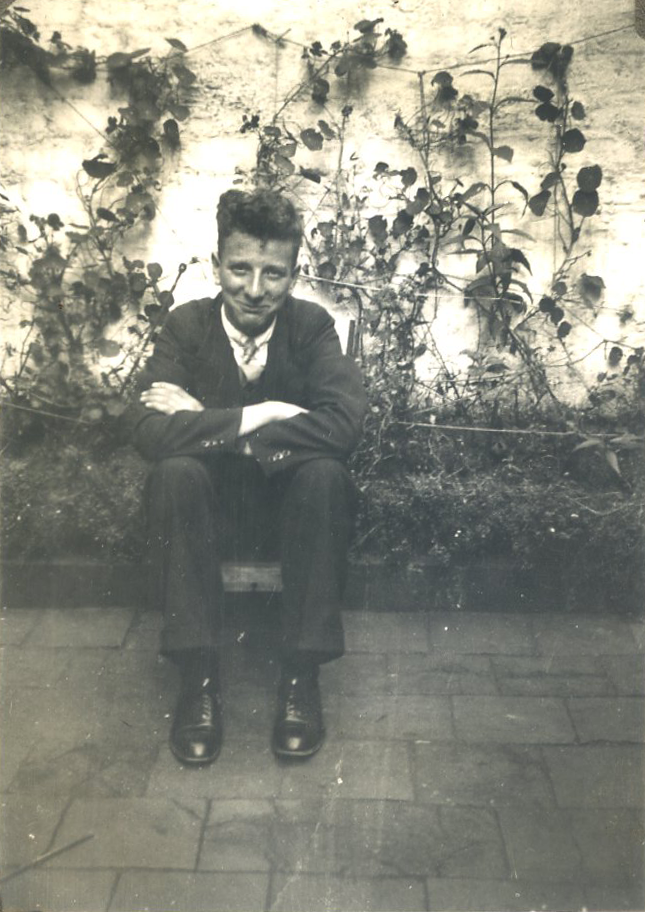
To identify the exact moment when I realised my own foundations were cracked, I need to recount an evening with an old school friend in a local Heswall pub. We are both in our mid-40s now, we have that comfortable worn-in friendship of many years. Since leaving the Navy, he quickly started being involved in the local community, being the local father Christmas for charities and eventually becoming a scout leader. It came up in conversation that he likes to try and take the best photographs he can of the kids to give away to the parents. He passed me his iPhone to see them. It was within that moment, the impact was seismic.
I didn't just see "good photos"; I saw the total, irreversible crash of the current system. Everything we spent decades building, our fortresses of photographic identity, our gatekeeping of "quality" and our need to demonstrate and uphold it. My model shoots, their laboured concepts, the dresses and their makeup. All my gear, the Hasselblad, Leica and 5x4s, my lighting setups and backdrops. All I had done with Wetplate, Dryplate’s salt prints and all those books I’d read and galleries visited. How did I become so blind? Blind to the fact that we had forgotten the subject in our desperate need to perform our photography. We were declaring our showmanship within the image, but we had forgotten to simply express the subject in front of us. Ian has never had an interest in photography; he knows none of its rules or technicalities. He simply loved the people in front of his camera. His images had a quality so powerful it surpassed everything I had achieved.
That was the moment I realised my images were just a vacant Veneer, they reeked of “showmanship” the performance of a photographer wanting to force his shallow artistic authority over every subject. The Ship has sunk.
The photographer has become conscious something is wrong with the system. The dream of obtaining a quality like a deep resonance within their images, portraits that stop people in their tracks, a power that stuns like the moment we lock eyes on a wild animal, that second of frozen acknowledgement. This potentially unattainable dream is a fire that cannot be retreated from, we refuse to admit its unattainable nature.
Many photographers trapped within this state of frustration eventually reject the photography that surrounds them. They may have spent years deeply admiring photographs from the past but now the impulse to dissect these photographs grows forcibly stronger, a search for any scrap of a clue. Uncertainty and doubt remain; a feeling that these images were simply powerful in their time.
This frantic re-evaluating of photography often manifests in the manufacturing of authenticity, the performance of the master photographer to simulate the honest image. The trauma may haunt them, personal moments where they met an Ian in a local pub, or maybe seeing the images captured by a mother unskillfully capturing images of her children playing in the street. Images they once cared little for now but have a quality they desperately need. This is the trap of the professional: attempting to engineer a soul using the very understanding that suffocated it in the first place.
Another lock that’s picked is the manufacture of an Aura - a spiritual quality, the soul of the subject created from the dark arts of the photographer. This is where the addiction to the perfect image starts to break apart; focus becomes softer, shadows deeper. It is a desperate attempt to haunt their own work - trying to paint a ghost onto the lens because the subject remained a stranger. It is a last-ditch attempt whilst still clinging onto the performance of the photographer, unprepared to accept the quiet power of being the witness.
This fight within their own work, a furnace of frustration and fear, starts the process of an unsustainable struggle to break out of the style of imagery they’ve become so jaded with. This is not only an internal battle fuelled by disillusionment of their own photography, but even more destructive, a battle against their own understanding of the power within the image. The desperate need to break free from the mainstream of photography eventually starts to force photographers to look inwards. This questioning of their current understanding of a powerful image is where the process of desperate sabotaging of the system begins.
Stage 2.5 is a noble stage to reach, few photographers fully understand the gilded cage they operate inside. To begin to understand the barrier that blocks their path takes great introspection. As George Orwell wrote "To see what is in front of one's nose needs a constant struggle.” The danger, and why so much amateur photography looks outdated and cliche, is that high end commercial photography understood this years ago and pivoted to Stage 2.5. The originality of this faked authenticity will soon fade further, its formula now well understood commercially and already being cannibalised by AI. The machine can simulate the 'look' of the Master, but it cannot reach the level of the Primary Witness.
Level Zero exists outside the Stages Hierarchy; it is the canon of honesty, the natural baseline against which all other stages are measured. It is the raw witnessing of what falls in front of the lens. At this level, the photographer steps aside to let the subject be, setting aside the ego through either total ignorance or hard-won mastery.
It is this purity that reveals the lie of Stage Two. Once understood, the veneer of mastery becomes transparent and hollow. Our hard-fought performance - the lighting, the Hasselblads, the "Showmanship"—is revealed as a form of armour we wore to protect ourselves from the vulnerability of a true encounter with both subject and audience. The system we occupy is rigged for social currency. It demands that we prove our presence rather than the subject's existence. Level Zero is the Primary Witness.
Ian’s photographs cut straight to the core of humanity; whilst Ian was concerned about capturing images of the personalities of those kids, I was busy building a vacant veneer around every subject I encountered, signalling my supposed artistic mastery. Ian had no desire to be viewed as a photographer - he simply loved the people in front of his iPhone.
This realisation - that the amateur witness can outperform the technical master - is not merely a personal moment of photographic crisis; it is the moment the malaise is taken hold of, removed from the fog and brought into the light. To escape our gilded cage, and regain our photography, we need to experience the shipwreck and reach the shore. When the photographer learns to stop the unsustainable struggle of escaping from the malaise and surrender his ego, the shore manifests. Total Mastery is our disappearance into being the witness.
In this era of social media exhaustion and the rising tide of AI, the landscape of the photographer has shifted in ways we could never have predicted. When the struggle began to feel insurmountable - when the fire of the medium felt as though it had faded into a cold, static line - it was not photography that had failed. It was the system we occupied that had reached its natural conclusion.
To reach the shore is to accept the necessity of the shipwreck. We must be willing to burn the "performance" of our photography - the gear, the ego, the need for social receipts - to find the ember that remains. Only through this destruction can the passion re-ignite. Once the armour of mastery is shed, the "Innocent Eye" of Stage One returns, but this time it is forged by the wisdom of the journey.
The feeling of endless possibilities, that depth of direction we once thought unimaginable, still exists. It was never lost; it was simply waiting for us to stop performing and start witnessing again. The aura has returned, not as a manufactured trick, but as the quiet, undeniable truth of the world in front of our lens.

The photograph’s ultimate power resides in Level Zero. It is the final power of Authenticity without ego, a strength Ai cannot hope to match. Ai is polluted by the system; it understands Mastery but not how to be the Witness. Level Zero is the fire that only grows as time passes, where the snapshot of the found photo in a pallet crate of the flea market rises from the waves and sinks the performance of the contemporary master. Level Zero is the destination of the final Master.
When the ego and the photographer are burnt away, the Artist is born. Once the experience of the Shipwreck has completed, yet the yearning for the mystical still lingers, this Aura we tried to manufacture, another path is possible. Stage 3 is the Speculative, in both nature and in execution. It is the investigation of the vibration we so desperately wanted to believe in. Stage 3 is obsessed with the Flicker, the moment the subject's mask slips and the signal leaks out. It is the investigation into the undefinable. The artist no longer composes but tunes into the subject until they can feel it resonate within.
The camera is no longer a trophy, embellished armour to signal our ability; it is instead a seismograph. A tool that doesn’t care if the earthquake is pretty, it only cares that the movement is real. Once we let go of the camera, it simply becomes one tool in the investigation of the speculative, nothing more. It is this search for the Aura that fuels us, this is our real drive that was hidden from us by our own quest to be the Performer of photography. Stage 3 is the determined act of seeking the vibration of the subject's soul. This is a persistent pursuit fuelled by intense passion, even in the face of impossibility. We may use photography, but the investigation of the Flicker is our Art.
Beauty should be suspect, such quality only stops the search for the spirit. It is a dead end; it satisfies the uncurious mind and halts it from digging deeper. The search for surface Beauty is shallow for the Art spirit; it obstructs the search for the signal. Beauty seals closed the image to what else it could be. The unexplainable lives in the unresolved and bleeding, not the polished and perfected. As with the obsession with capturing beauty, the goal to create the beautiful artefact must also be abandoned. The creation of the masterpiece is a social currency, the virus that broke the system.
Stage 3 is investigative. If never shown, its value stays. Stage 3 isn’t photography, it surpassed it. Stage 3 is Francesca Woodman, Dianne Arbus, Nan Goldin and Masahisa Fukase. They were already there years before us. They were who we were looking for when we desperately searched for clues from past Masters, we just never understood the time and its system were different then. Stage 3 is the Artist. It is the passion for life, the passion to be a witness of the highest awareness. The power of photography remains; the Innocent Eye who only sees potential, it didn’t fade. Once understood, the static disappears.